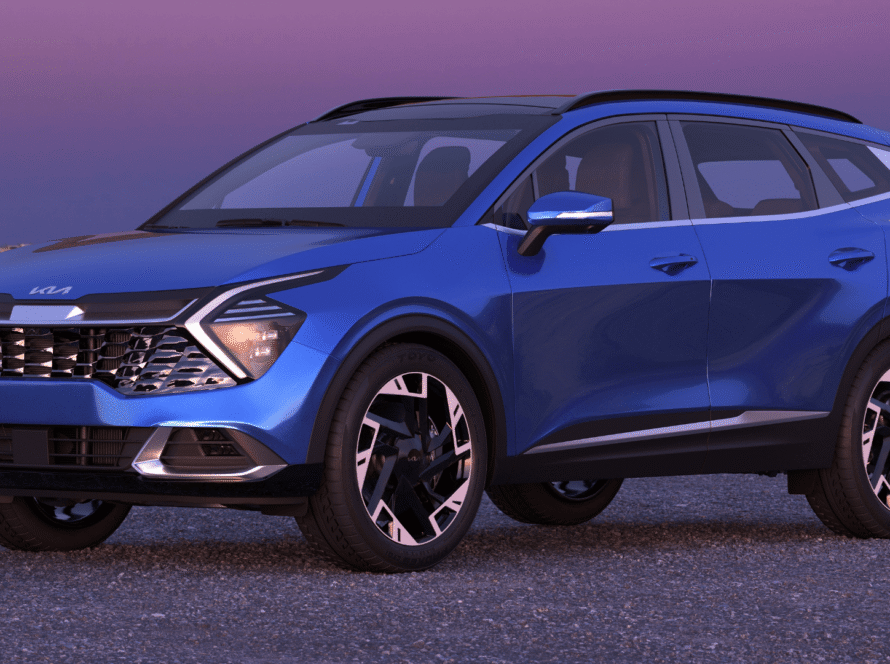
When your Toyota has been damaged, you need more than a shop that can make the dents disappear. You need a repair team that understands how the vehicle’s body, structure, paint, glass, electronics, airbags, cameras, radar sensors, and driver-assistance features work together. At Metro Collision Center, we provide Toyota body shop services for Los Angeles drivers who want a safe, accurate, and beautifully finished repair without unnecessary stress.
From a scraped Corolla bumper to major collision damage on a RAV4, Camry, Tacoma, Highlander, Prius, or 4Runner, we approach every vehicle with a complete repair plan. Our team inspects visible and hidden damage, explains the estimate, coordinates with major insurance companies, follows vehicle-appropriate repair procedures, and checks the finished work before delivery. The goal is not simply to make your Toyota look better. It is to restore its appearance, structural integrity, fit, finish, and relevant safety functions as closely as the repair plan allows.
Metro Collision Center has served Los Angeles drivers since 2010 from 5227 W Pico Boulevard. We combine experienced craftsmanship, advanced repair technology, honest communication, and efficient service in one locally trusted shop. If you are searching for a Toyota body shop in Los Angeles after a fender bender, parking accident, sideswipe, rear-end collision, or more serious crash, contact us for a free estimate. Walk-ins are welcome during business hours, and appointments help us give larger repairs dedicated attention.
Why Toyota Collision Repair Requires the Right Expertise
A modern Toyota is an integrated system, not a collection of interchangeable panels. What looks like cosmetic bumper damage can involve mounting brackets, an impact absorber, reinforcement components, wiring, parking sensors, blind-spot monitoring equipment, or a camera. A windshield replacement can affect the forward-facing camera used by Toyota Safety Sense. Damage around a wheel may extend to suspension, steering, alignment, or adjacent structural areas. Even a small gap between panels can signal that the impact traveled farther than expected.
That is why a proper Toyota collision repair begins with diagnosis and repair planning. The model, model year, trim, options, construction materials, damage location, and severity all matter. Toyota Safety Sense equipment varies among vehicles and years, so the correct procedures cannot be guessed from the badge alone. Components affected by collision damage, removal, replacement, or refinishing may require inspection, a health check, or static or dynamic calibration according to current procedures.
Our technicians evaluate the whole repair, not only the most visible dent. We identify damaged areas, determine which parts can be safely repaired and which require replacement, review structural and electronic considerations, and create an estimate based on the evidence available. If teardown reveals hidden damage, we document it and address any necessary supplement with the insurer or vehicle owner. This disciplined process helps prevent incomplete repairs, surprise gaps, warning lights, wind noise, water leaks, poor panel alignment, or safety features that do not operate as intended.
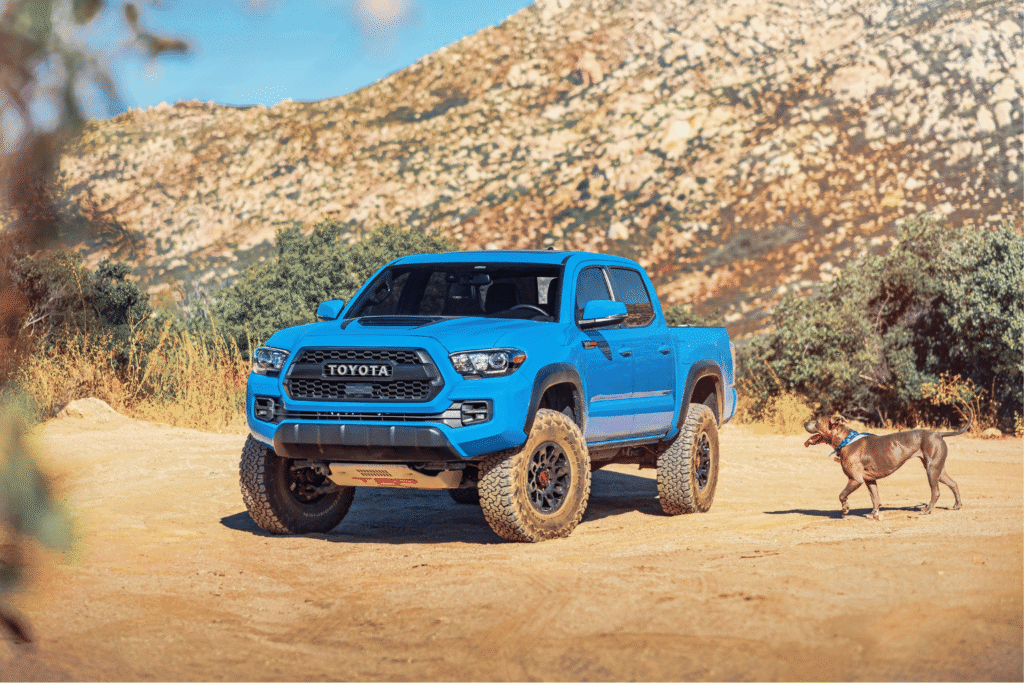
A Los Angeles Toyota Body Shop Focused on Safety, Quality, and Clarity
Metro Collision Center is built around a simple promise: repair vehicles honestly and do the work right the first time. Our Toyota body shop team uses advanced equipment and manufacturer-informed methods to return collision-damaged vehicles toward their pre-accident condition. Our I-CAR Gold-certified technicians understand that a high-quality result depends on every stage—from damage analysis and parts planning to metalwork, refinishing, reassembly, and final inspection.
We also understand the practical side of an accident. You may need help interpreting an estimate, communicating with an insurance adjuster, arranging a repair timeline, or deciding whether a small claim is worth filing. We work with all major insurance companies and can help manage the process from estimate through final delivery. You retain the right to choose the repair shop you trust; an insurer may recommend a facility, but the vehicle owner makes the decision.
Clear communication matters because no responsible shop should promise a final price or completion date before understanding the full scope of damage and parts availability. We explain what we see, what the repair is intended to accomplish, and what may change after disassembly. Our team moves efficiently without treating speed as a substitute for accuracy. For Los Angeles drivers balancing work, family, and transportation, that combination of transparency and practical support can make a difficult week much easier.
Complete Toyota Body Shop Services
Every collision is different, which is why Metro Collision Center offers a broad range of auto body and collision repair services under one roof. Your repair plan may include one service or a coordinated sequence of structural, cosmetic, mechanical, glass, and electronic operations.
Toyota Collision Repair and Damage Assessment
Collision repair begins with a careful inspection of the impact area and related systems. We look for exterior damage, shifted panels, broken attachments, cracked lamps, damaged reinforcement, structural movement, and signs that the impact affected areas beyond what is immediately visible. We then plan disassembly, repair, replacement, refinishing, calibration, and quality-control steps appropriate to the vehicle.
If you have just been hit, first move to safety if possible, check for injuries, exchange information, photograph the vehicles and scene, and report the incident as required. Our guide to what to do after a fender bender in Los Angeles gives you a practical sequence to follow before the repair begins.
Toyota Bumper Repair and Replacement
Front and rear bumpers are designed as systems. The painted cover is only the visible layer; brackets, absorbers, reinforcement, wiring, sensors, and adjacent panels may sit behind it. We repair eligible scuffs, scratches, cracks, dents, and deformation, or replace parts when repair is not the safe or effective choice. After reassembly, we check fit, gaps, attachment, surface quality, and affected electronic functions.
Do not assume a small bumper dent is purely cosmetic. Our article explaining why a tiny bumper dent can cost more later covers hidden mounting damage, cracked finishes, sensor concerns, and the value of an early inspection.
Dent Repair and Paintless Dent Removal
Some shallow dents with intact paint can be candidates for paintless dent repair, a technique that reshapes the metal without conventional refinishing. Location, depth, sharpness, stretched metal, body lines, material, and access behind the panel determine whether it is suitable. When paintless repair is not appropriate, we use conventional metal repair and refinishing to restore the contour. We will recommend the approach that fits the actual damage rather than force every dent into the same solution.
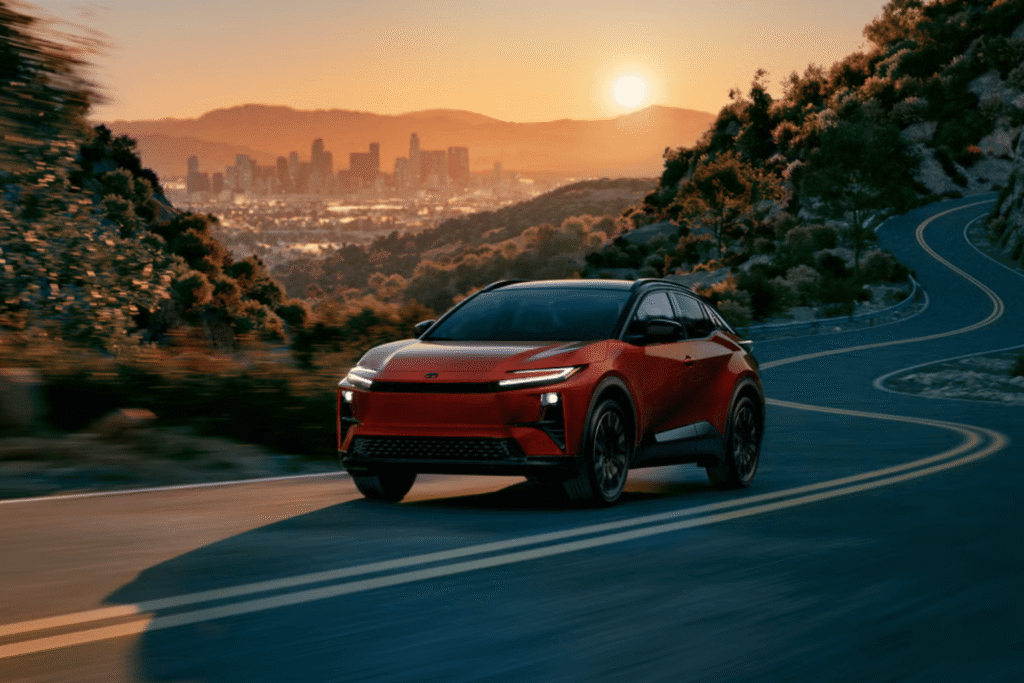
Toyota Paint Repair and Color Matching
Factory-quality appearance depends on preparation, application, color matching, blending, curing, polishing, and environmental control. Toyota paint codes give technicians a starting formula, but vehicle age, sun exposure, previous repairs, metallic or pearl effects, and panel orientation can influence the final match. Our refinishing process is designed to reproduce color, texture, gloss, and transition as accurately as possible so the repaired area integrates naturally with surrounding panels.
We handle scratches, chips, scuffs, clear-coat damage, repaired panels, and replacement-part refinishing. Proper corrosion protection and seam-related materials are also considered where the repair procedure calls for them. The result should look cohesive in real Los Angeles sunlight, not only under shop lighting.
Frame Straightening and Structural Repair
Structural damage requires measurement, appropriate equipment, trained judgment, and strict attention to documented repair limitations. We assess unibody and frame-related areas, identify whether components may be straightened or must be replaced, and restore dimensions using suitable repair methods. Accurate structure supports panel fit, wheel alignment, crash-energy management, door operation, glass fit, and the performance of connected systems.
Toyota vehicles can use high-strength and ultra-high-strength steels in safety-critical locations, and repairability can differ by model and model year. Heat, sectioning, pulling, welding, and replacement decisions must match the affected material and procedure. A generic shortcut can change properties or compromise the intended repair, which is why structural work should never be based on appearance alone.
Glass and Windshield Replacement
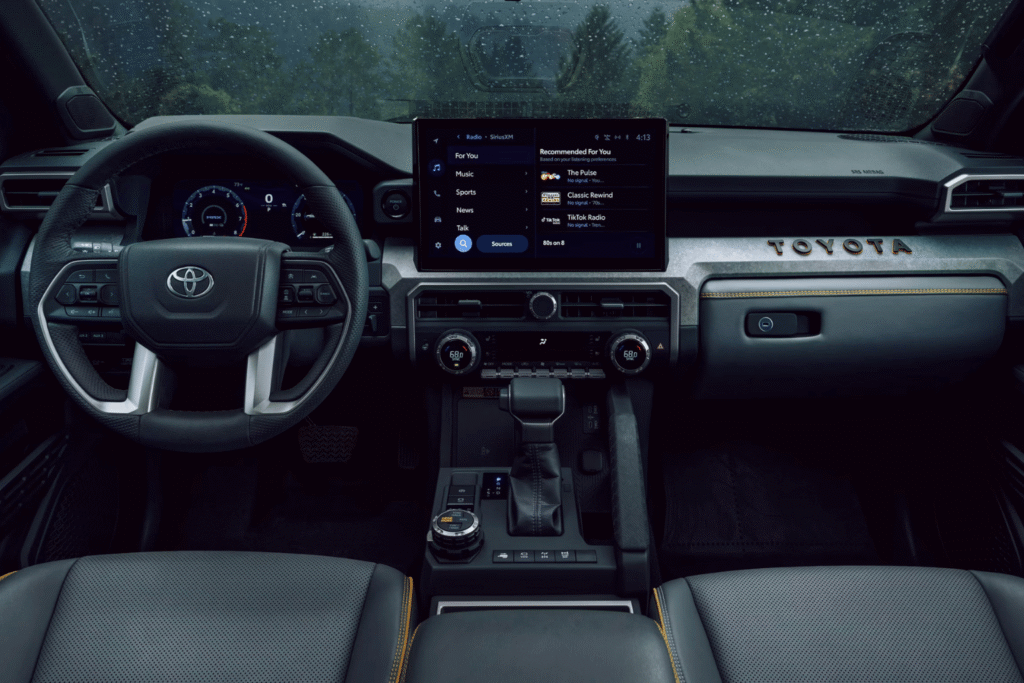
A cracked windshield affects visibility and may affect the body’s supporting structure. On many Toyota models, the windshield also provides the viewing area and mounting environment for a forward recognition camera. Glass and windshield replacement therefore involves more than installing glass: the correct glass, moldings, adhesive system, preparation, cure time, leak prevention, and any required camera calibration all matter.
We inspect the vehicle configuration and plan the related operations before delivery. If a camera or sensor has been disturbed, replaced, or affected by the repair, applicable calibration and verification steps should be completed. That helps features such as lane-related alerts, pre-collision assistance, and automatic high beams perform according to the vehicle’s design and current repair information.
Aluminum, Electric Vehicle, and Hybrid Repair Considerations
Toyota’s lineup includes hybrid, plug-in hybrid, battery-electric, and vehicles with mixed-material components. Prius, Camry Hybrid, Corolla Hybrid, RAV4 Hybrid, RAV4 Plug-in Hybrid, Highlander Hybrid, Sienna, Crown, Prius Plug-in Hybrid, and bZ4X repairs can require additional precautions around high-voltage systems, isolation, scanning, lifting, storage, welding, refinishing temperatures, and parts handling. Our complete services overview includes electric vehicle and aluminum repair capabilities.
High-voltage identification and safety procedures should be addressed before work begins. Collision damage near the battery, cables, charge port, cooling system, underbody, or related electronics may change the repair plan. We never treat an electrified Toyota as though it were identical to a conventional gasoline vehicle.
Toyota Safety Sense, ADAS Scanning, and Calibration
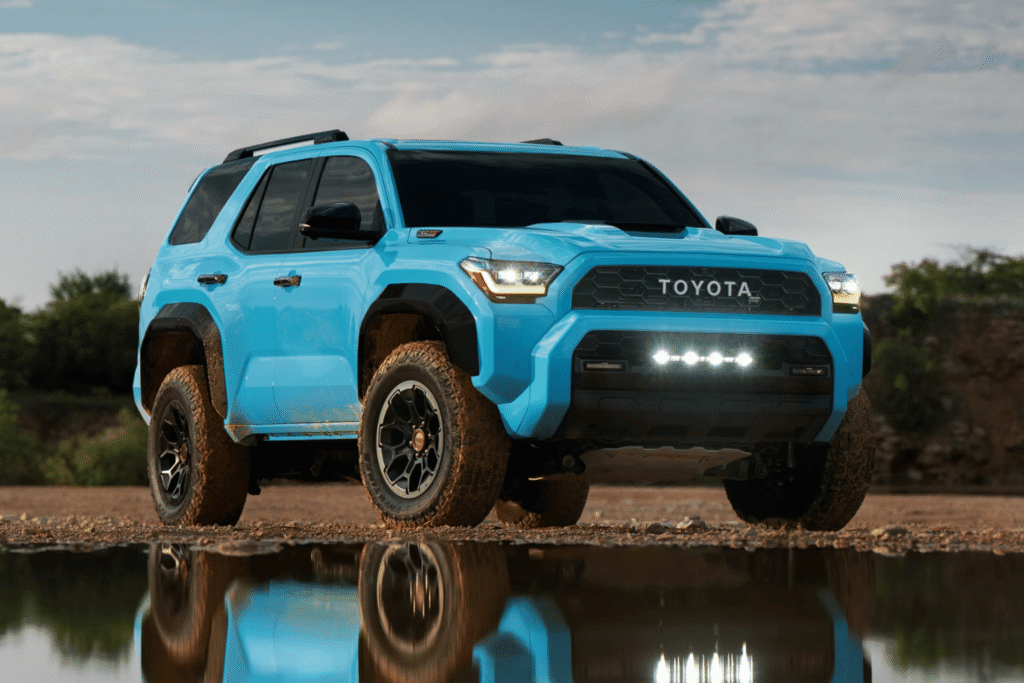
Advanced driver-assistance systems, commonly called ADAS, can depend on cameras, millimeter-wave radar, ultrasonic sensors, steering-angle information, wheel-speed data, and control modules. Toyota Safety Sense may include functions such as a Pre-Collision System, Lane Departure Alert, Lane Tracing Assist, Road Sign Assist, Dynamic Radar Cruise Control, Proactive Driving Assist, and Automatic High Beams, depending on the model, year, and trim.
Collision repairs can affect these systems even when no warning light appears. Removing a bumper, replacing a windshield, changing ride height, repairing suspension, disconnecting certain components, or moving a sensor can trigger a calibration requirement. The exact operation may be static, dynamic, or both. It can require level flooring, controlled lighting, specified targets, tire-pressure checks, fuel or load conditions, precise measurements, and an unobstructed road test route.
Metro Collision Center considers scanning and calibration during repair planning instead of treating them as an afterthought. The goal is to identify relevant diagnostic trouble codes before work, protect sensitive components during repair, complete required calibrations, clear or resolve repair-related faults appropriately, and verify systems afterward. Because requirements differ, we determine them from the specific vehicle and repair—not from a universal checklist.
Toyota Models We Commonly Welcome
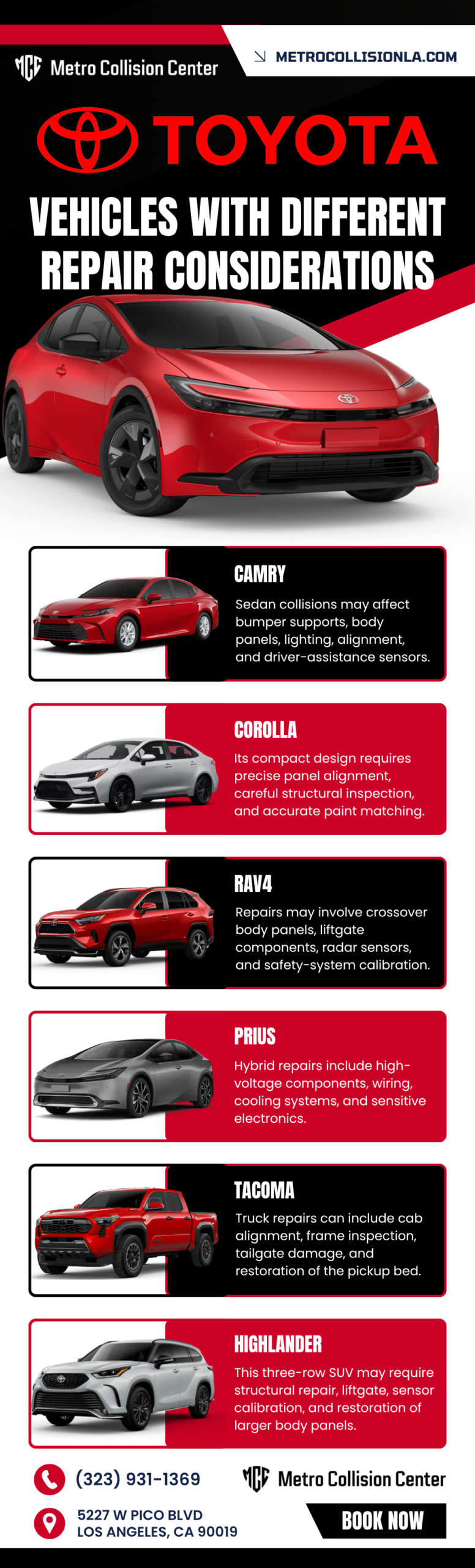
Our Toyota body shop serves all Toyota cars, crossovers, SUVs, trucks, vans, hybrids, plug-in hybrids, sports cars, and battery-electric vehicles. Popular models include:
|
Toyota models |
Collision repair focus |
|
Toyota Camry and Camry Hybrid |
bumper, door, quarter-panel, structural, paint, glass, and Toyota Safety Sense-related repair planning for one of Los Angeles’ best-known sedans. |
|
Toyota Corolla, Corolla Hatchback, and Corolla Hybrid |
efficient repair planning for commuter vehicles that may combine compact packaging with cameras, radar, and modern crash structures. |
|
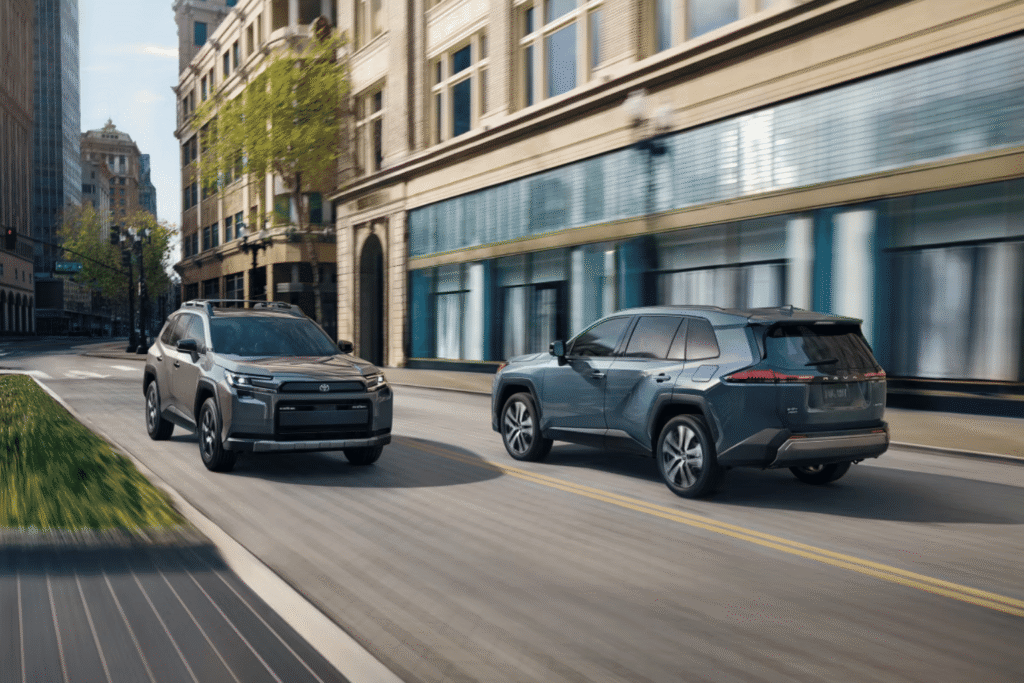
Toyota RAV4, RAV4 Hybrid, and RAV4 Plug-in Hybrid |
liftgate, rear body, bumper, quarter-panel, door, unibody, sensor, and electrified-system considerations. |
|
Toyota Highlander, Highlander Hybrid, and Grand Highlander |
three-row SUV repairs involving larger panels, family-focused safety systems, available all-wheel drive, and hybrid configurations. |
|
Toyota Tacoma and Tundra |
pickup collision repair for bedsides, tailgates, bumpers, cabs, frames, wheels, suspension, cameras, sensors, and towing-related equipment. |
|
Toyota 4Runner, Land Cruiser, and Sequoia |
SUV body and structural repairs that account for vehicle-specific construction, off-road equipment, cameras, and sensor placement. |
|
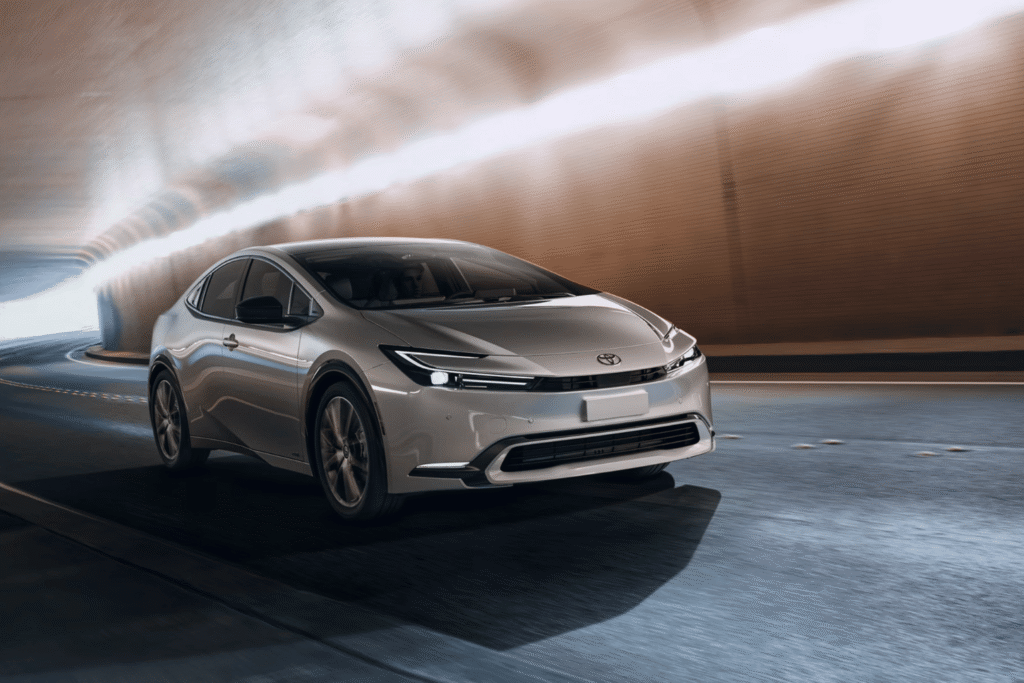
Toyota Prius and Prius Plug-in Hybrid |
aerodynamic panel fit, complex lighting, hybrid safety procedures, glass, refinishing, and ADAS considerations. |
|
Toyota Sienna |
sliding doors, tracks, quarter panels, liftgates, sensors, cameras, and hybrid-system precautions for a vehicle many families depend on daily. |
|
Toyota Crown and Crown Signia |
model-specific repair research for newer body styles, hybrid systems, distinctive finishes, sensors, and replacement parts. |
|
Toyota GR86, GR Corolla, and GR Supra |
precision cosmetic and structural repair for performance models where panel contours, finish quality, wheel condition, alignment, and driving dynamics deserve close attention. |
|
Toyota bZ4X |
battery-electric collision planning involving high-voltage precautions, underbody inspection, charging components, thermal systems, sensors, and repair-environment requirements. |
Older vehicles are welcome too, including the Avalon, Matrix, Venza, FJ Cruiser, Yaris, Solara, Celica, and earlier generations of Toyota’s current models. Each generation can differ in materials, electronics, part availability, and repair procedures. We identify the vehicle by its VIN and configuration so the estimate reflects the Toyota in front of us.
OEM, Alternative, Recycled, and Aftermarket Parts
One of the most common questions owners ask is whether a Toyota collision repair will use Original Equipment Manufacturer parts. Toyota Genuine Parts are produced for Toyota applications and can offer known specifications, material characteristics, corrosion protection, fit, and integration. Alternative parts may include aftermarket, recycled original equipment, remanufactured, or reconditioned components. Insurance policies, state rules, part availability, vehicle age, lease terms, safety considerations, and owner preferences can all influence what is authorized.
Metro Collision Center’s priority is a safe, complete, high-quality repair. We use manufacturer-informed procedures and OEM parts where specified, authorized, or appropriate to the repair plan. We will not call the shop “Toyota Certified” unless that status is formally applicable, and we will not hide a parts decision behind vague terminology. Ask us what is included, and we will walk through it with you.
Get a Free Toyota Body Shop Estimate in Los Angeles
Do not let uncertainty keep a damaged Toyota on the road longer than necessary. Bring it to Metro Collision Center for a professional inspection and a clear conversation about repair options. Visit us at 5227 W Pico Blvd, Los Angeles, CA 90019, call (323) 931-1369, or contact us online. We are open Monday through Friday from 8:00 a.m. to 5:00 p.m. Walk-ins are welcome for estimates, and scheduling ahead is recommended for larger repairs or a tight schedule.
Choose a Toyota body shop that looks beyond the dent. Choose Metro Collision Center for careful repair planning, skilled craftsmanship, insurance support, advanced technology, and a finish you will be proud to drive. Request your free estimate for your Toyota repair needs today.
Our technicians hold I-CAR Gold Class certification — the highest professional recognition in the collision repair industry. I-CAR Gold Class means our team completes ongoing, role-specific training every single year to stay current with the latest repair technologies, materials, and procedures.
Here’s what our process looks like from your side:
- 📞 Call or submit a free estimate online — we respond fast, usually same day
- 🔍 Drop it off — we scan, assess, and handle all insurance communication
- 🔧 We repair it right and paint it perfectly— OEM parts, proper procedures, full ADAS calibration
- 🚗 You pick it up — looking exactly like the accident never happened
The most trusted Toyota body shop in Los Angeles is ready when you are.
👉 Request your free estimate at metrocollisionla.com or give us a call. We’ll take it from here.
Metro Collision Center is a premier Toyota body shop in Los Angeles dedicated to precision factory-standard restorations, comprehensive ADAS calibration, and stress-free insurance claim management.
Frequently Asked Questions About Toyota Body Shop Repair
Should I take my Toyota to a dealership or an independent body shop?
The best choice is a collision shop with the training, equipment, repair information, quality controls, and communication needed for your vehicle. Many dealerships do not operate their own body shops and refer work elsewhere. Ask any shop about Toyota-specific procedures, scanning, calibration, parts, structural equipment, insurance coordination, and documentation. Metro Collision Center provides manufacturer-informed Toyota collision repair without claiming unsupported Toyota certification.
Can I choose my own Toyota body shop after an insurance claim?
Yes. In California, the vehicle owner can select the repair facility. An insurer may recommend a network shop, but you are not required to use that recommendation. Tell the insurer where you want the Toyota repaired, then share the claim information with the shop so estimate and supplement communication can begin.
Will insurance pay for Toyota Genuine OEM parts?
It depends on your policy, endorsements, vehicle age, part availability, liability, and the insurer’s estimate. Some policies allow alternative parts. Ask for a written parts breakdown and discuss OEM options before repairs advance. If coverage does not include the requested part, you may be able to challenge the decision with documentation or pay an approved difference, depending on the situation.
Do I need Toyota Safety Sense calibration after a collision?
Possibly. Calibration may be required when a camera, radar sensor, bumper, windshield, suspension component, or related part is damaged, removed, replaced, or repositioned. Requirements vary by VIN, model year, trim, and repair operation. The shop should research the vehicle-specific procedure rather than assume calibration is or is not needed.
Can a body shop repair a Toyota hybrid or electric vehicle?
Yes, when the facility can follow the relevant high-voltage and collision procedures for that vehicle and damage. Prius, RAV4 Hybrid, Sienna, Crown, plug-in hybrid models, and bZ4X may require special isolation, scanning, storage, lifting, welding, refinishing, or battery-area precautions. Tell the shop about warning messages, underbody impacts, charging problems, or liquid leaks immediately.
How much does Toyota collision repair cost?
There is no reliable model-wide price. Cost depends on labor, damage depth, structural involvement, paint operations, parts, scans, calibrations, glass, suspension work, and hidden damage. Two similar-looking bumper impacts can produce different estimates if one damaged a sensor or reinforcement. An in-person inspection and, when necessary, teardown provide a much stronger answer than an online average.
How long will my Toyota body repair take?
Minor cosmetic work may take far less time than a repair involving structural damage, back-ordered parts, insurance supplements, multi-stage paint, glass, or ADAS calibration. We provide an estimated timeline after inspection and update it if teardown or parts availability changes the plan. Accurate repair and verification take priority over an unrealistic promise.
Is it safe to drive with a dented Toyota bumper?
Not always. A bumper cover can hide broken brackets, damaged reinforcement, wiring issues, sensor movement, or contact with a wheel or lamp. Do not drive if the bumper is loose, a tire rubs, lights are damaged, fluids leak, airbags deployed, the vehicle pulls, or safety warnings appear. When uncertain, arrange an inspection or tow.
Can paintless dent repair fix my Toyota?
Paintless dent repair can work well when the paint is intact, the metal is not sharply creased or excessively stretched, and the technician can access the back of the damage. Dents on body lines, panel edges, aluminum parts, or areas with cracked paint may require conventional repair and refinishing. We inspect the dent before recommending a method.
Does Metro Collision Center offer free estimates and work with insurance?
Yes. Metro Collision Center offers free estimates, works with major insurance companies, and helps coordinate the process from the initial assessment through repair completion. Visit 5227 W Pico Blvd in Los Angeles, call (323) 931-1369, or contact us online to schedule your Toyota body shop estimate.