AI Summary: Mazda Body Shop Guide for Los Angeles Drivers
- The most frequent damage in Los Angeles includes bumper collisions, door dents, and sensor-related repairs caused by heavy city traffic and tight parking.
- Mazda CX-30, CX-50, and CX-90 Repairs: Newer Mazda SUVs include advanced safety systems, SKYACTIV structural engineering, and complex multi-layer paint finishes.
- AI tools are helping body shops analyze damage faster, improve color matching, and perform more accurate ADAS calibrations.
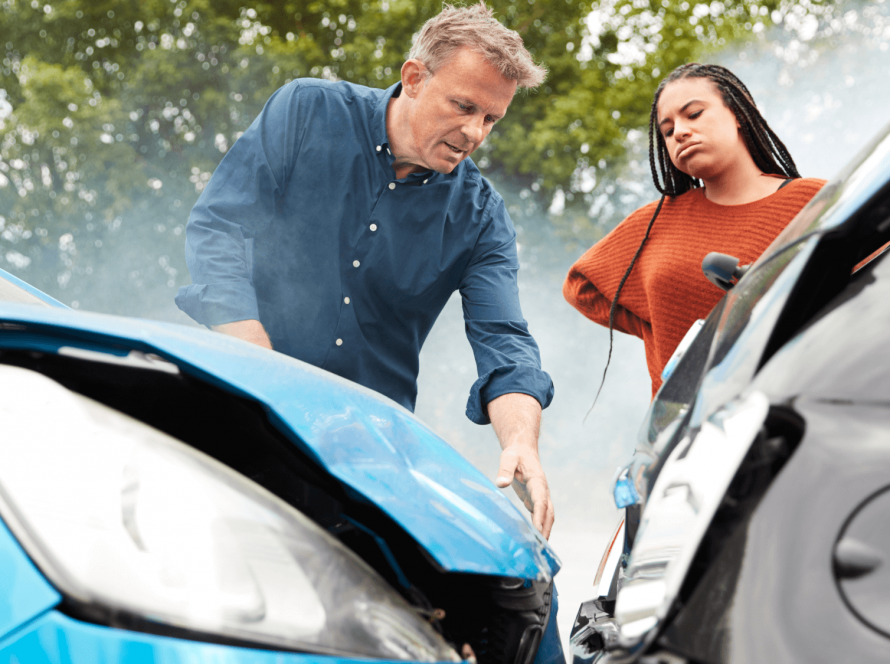
- What to Do After a Mazda Accident in Los Angeles? Important steps include documenting the accident, contacting insurance, and scheduling a professional collision inspection.
- Mazda collision repair timelines depend on damage severity, parts availability, and whether safety system recalibration is required.
- Soul red and Machine gray: color-matching technology and a professional tri-coat or quad-coat paint process to accurately reproduce Mazda’s most complex factory finishes.
- Mazda i-ACTIVSENSE ADAS calibration: every repair includes mandatory pre-scan and post-scan diagnostics with precise recalibration of safety systems such as radar cruise control, Smart Brake Support, and blind-spot monitoring.
- Metro Collision Center manages the insurance claim process and advocates for proper OEM parts and correct manufacturer-approved repair procedures.
So, someone just clipped your Mazda on the 405. Or maybe a rogue shopping cart in a Costco parking lot made some very bad life choices. Either way — your Mazda is dinged up, and you’re quietly panicking about that Soul Red Crystal Metallic paint never looking the same again.
We get it. We’ve heard that story roughly a thousand times.
At Metro Collision Center, we’re a specialized Mazda body shop in Los Angeles that actually understands what your car is made of — literally. From SKYACTIV® high-tensile steel frames to i-ACTIVSENSE radar sensors to Mazda’s notoriously tricky multi-stage paint chemistry, we handle it all. And we do it right, the first time, without insurance drama.
This guide walks you through everything: why Mazda repairs are genuinely different from fixing a standard sedan, what makes Soul Red so hard to match, how your safety systems need recalibration after even a fender-bender, and exactly what to expect from Mazda repair in Los Angeles in 2026.
Why You Need a Specialized Mazda Body Shop After an Accident
Here’s the thing most people don’t realize: taking your Mazda to a generic body shop is a bit like taking a MacBook to a shop that mostly fixes flip phones. Technically they’re both computers. Technically the guy has tools. But the outcome? Risky.
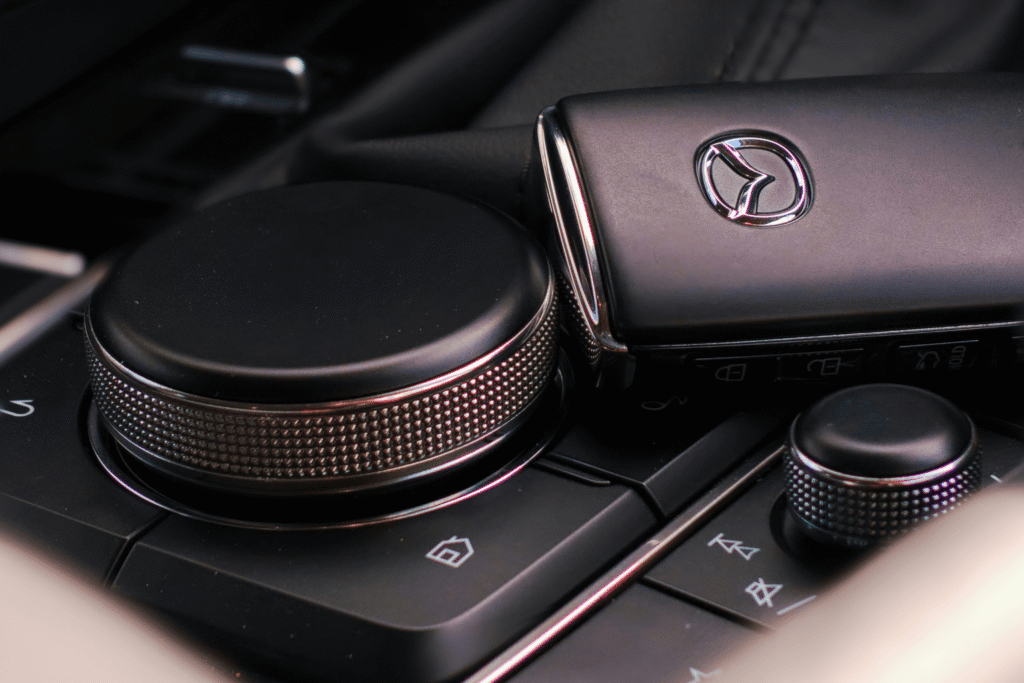
Mazda vehicles — especially the newer CX-30, CX-50, CX-90, and Mazda3 — are built around two deeply integrated systems that require specialized knowledge to repair properly.
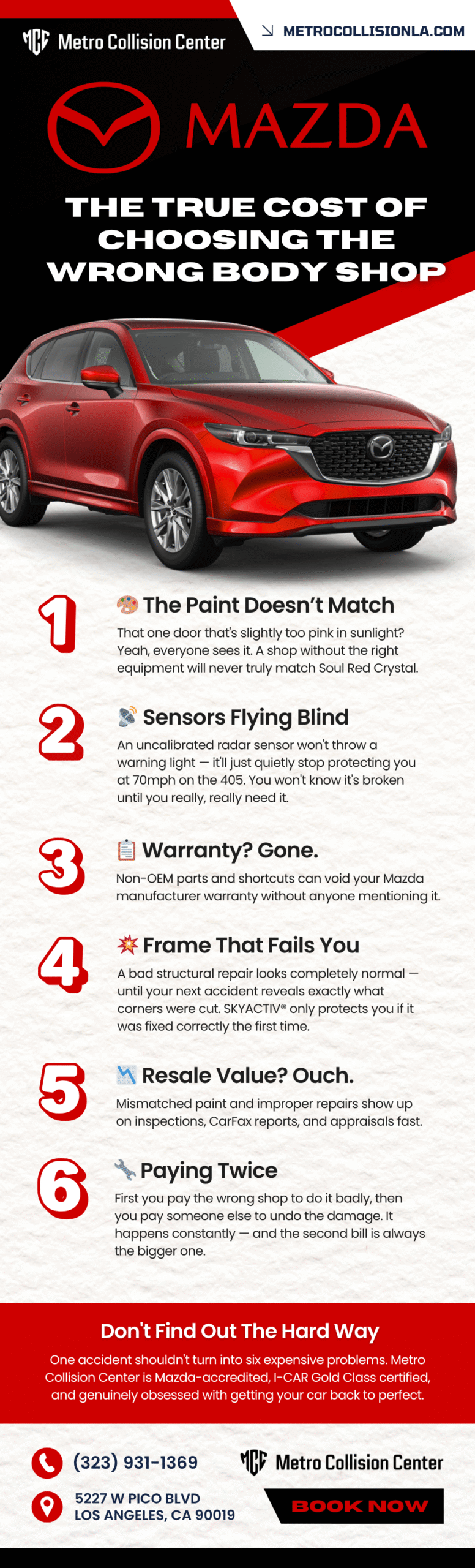
First, the SKYACTIV® Body. This isn’t just a fancy marketing term. Mazda uses ultra-high-tensile steel in strategic locations throughout the vehicle frame, engineered to absorb and redirect crash energy along specific pathways. A shop that doesn’t follow Mazda’s OEM repair procedures — using the right cutting points, welding specifications, and sectioning methods — can unknowingly compromise those pathways. The car looks fixed on the outside. But in a future collision, it won’t protect you the way it was designed to.
Second, the i-ACTIVSENSE suite. Your Mazda is loaded with radar, cameras, and ultrasonic sensors hidden behind bumper covers, grilles, mirrors, and windshields. Every single one of these needs to be scanned before and after any collision repair. A sensor that’s 2 millimeters out of alignment can mean your Smart Brake Support fires at the wrong time — or doesn’t fire at all.
That’s why choosing an experienced Mazda body shop in Los Angeles genuinely matters. At Metro Collision Center, we’ve invested in the training, diagnostic equipment, and Mazda-specific repair data to do this correctly. Every time.
Mastering the Match: Why Mazda's Soul Red Crystal Is So Hard to Paint
This is the part where we get a little nerdy. Stick with us — it’ll make you feel much better about your repair.
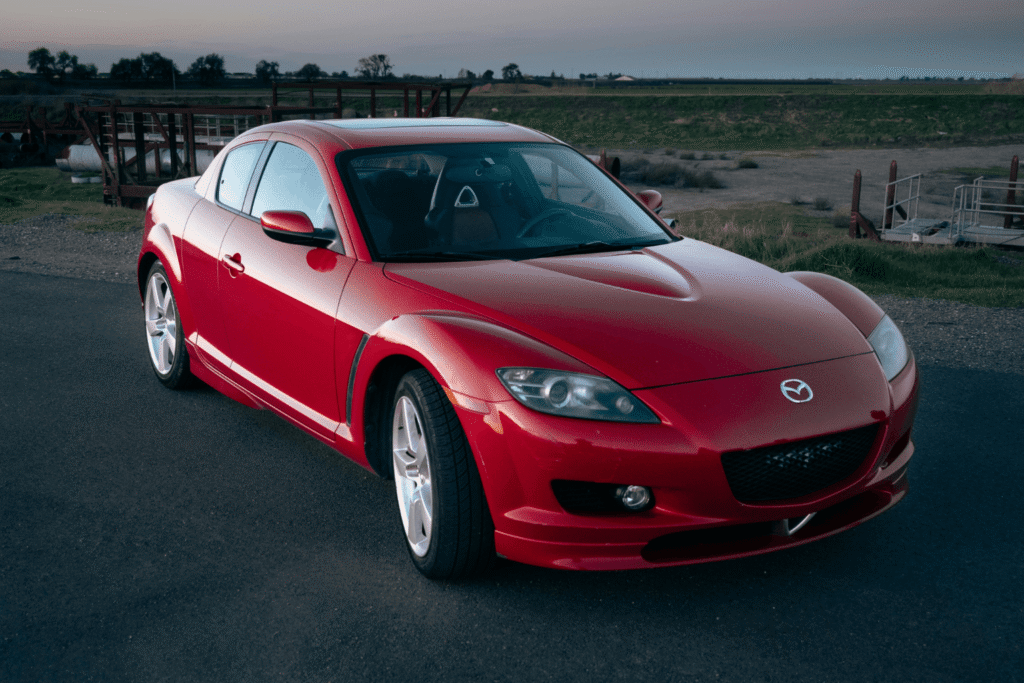
If you own a Soul Red Crystal Metallic Mazda, congratulations — you picked arguably the best color in the automotive industry right now. Soul Red Crystal has won multiple industry design awards and is genuinely one of the most visually stunning factory finishes on any mainstream vehicle.
It’s also an absolute nightmare to match. Here’s why.
Soul Red Crystal isn’t one paint layer. It’s a quad-coat system — four distinct layers, each doing a specific job:
- Primer coat — adhesion and corrosion protection
- Deep black base coat — creates depth and shadow from underneath
- Red metallic mid-coat — the signature crimson with fine aluminum flakes
- Tinted clear coat — a semi-transparent red tint that intensifies the color in direct light
That last layer is the tricky one. Most standard clear coats are completely transparent. Mazda’s tinted clear adds a warm red hue that shifts dramatically based on viewing angle and lighting. It’s what gives Soul Red Crystal that almost liquid, three-dimensional glow.
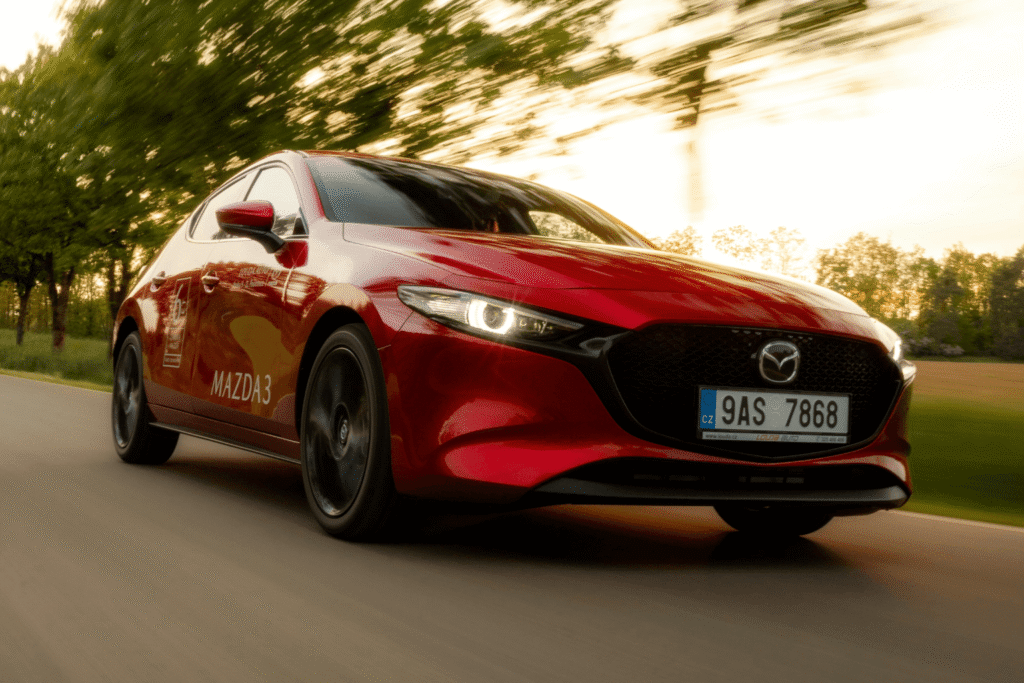
Here’s what happens at an average body shop: they match the red metallic base coat reasonably well, spray standard clear, and hand the car back. In the shop’s fluorescent lighting, it looks okay. Then you drive it into sunlight and suddenly the repaired panel is noticeably flatter, almost pink-ish compared to the rest of the car.
We don’t do that.
At Metro Collision Center, we use a Datacolor Spectrophotometer — a device that reads your car’s exact paint formula from the original factory layer, accounting for age, fading, and environmental variation. We then custom-mix all four layers, including the tinted clear coat, and apply them in controlled temperature and humidity conditions.
The same precision applies to Machine Gray Metallic, Mazda’s other famously complex finish. Machine Gray uses a multi-stage process with deep charcoal undertones and a cool metallic shimmer that shifts between silver and blue-gray depending on the light. Miss the formula by even a small margin and it looks like a different car.
We’ve matched hundreds of Soul Red Crystal and Machine Gray panels right here at our Mazda body shop in Los Angeles.

Protecting Your SKYACTIV® Technology: Structural Mazda Repair in Los Angeles
When Mazda says “SKYACTIV,” they’re not just talking about the engine. The SKYACTIV-Body is a complete structural philosophy built around one goal: keep the occupant cell rigid while the front, rear, and side zones crush in a controlled, predictable way.
To achieve this, Mazda uses ultra-high-tensile steel (UHTS) with tensile strengths up to 1,500 MPa in critical locations. For comparison, conventional mild steel sits around 270 MPa. That difference matters enormously in a crash — and it matters enormously during repair.
UHTS can’t be repaired the same way regular steel can. It work-hardens when deformed, meaning a panel that looks bent back into shape may actually have compromised metallurgical properties. OEM procedures specify which sections must be replaced entirely versus which can be straightened, and exactly where cuts and welds are permitted. Not every shop has that expertise. A true Mazda body shop invests in the training and equipment to handle SKYACTIV steel correctly — and that investment shows in the final repair.
At Metro Collision Center, our technicians follow Mazda’s I-CAR structural repair procedures to the letter. We use factory-specified MIG brazing and resistance spot welding techniques in the correct locations. We don’t improvise on frame repair — because the consequences of getting it wrong aren’t visible until another accident happens.
Every structural Mazda repair in Los Angeles we perform includes a post-repair dimensional measurement to verify the vehicle’s geometry is back within factory tolerance. If it’s not, we keep working until it is.
i-ACTIVSENSE Safety System Calibration: Beyond the Bumper
Let’s talk about what’s hiding behind your Mazda’s bumper cover.
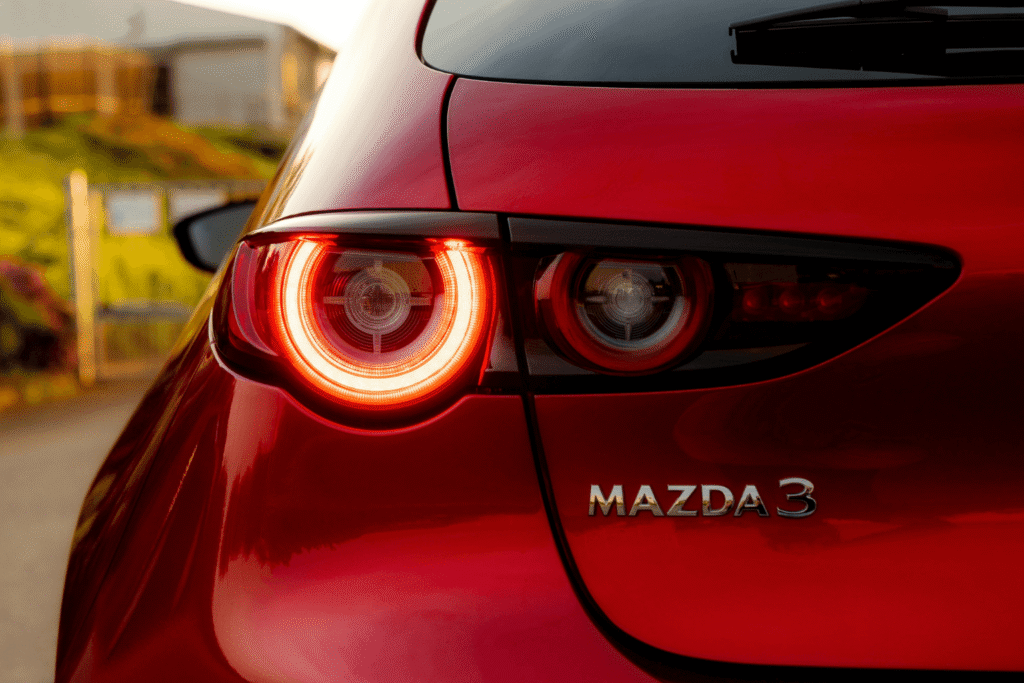
The front bumper area of a modern Mazda CX-50 or Mazda3 contains, at minimum: a forward-facing radar unit for the Smart Brake Support and Radar Cruise Control systems, a front camera for Lane Keeping Assist and Traffic Sign Recognition, and ultrasonic sensors for front parking detection. Some models also have a LiDAR proximity sensor depending on trim level.
Remove the bumper cover — which happens in virtually every front-end collision — and every single one of those sensors needs to be recalibrated before the car is safe to drive.
What is ADAS calibration, exactly? It’s the process of resetting each sensor’s “zero point” — the precise angle and distance reference from which it measures the world around the car. After any repair that moves the bumper, hood, windshield, or side mirror, those references can shift. Sometimes by millimeters. Millimeters that, at 70 mph on the 101 Freeway, could mean the difference between the system stopping you in time or not.
At Metro Collision Center, we perform:
- Pre-repair diagnostic scan — to capture any existing fault codes and create a baseline
- Post-repair static ADAS calibration — using Mazda-specific target boards and calibration software in our dedicated calibration bay
- Dynamic calibration road test — driving the vehicle under specific conditions to allow forward-facing cameras to learn the lane markings and confirm alignment
- Final diagnostic scan — to verify zero fault codes remain before we hand your keys back
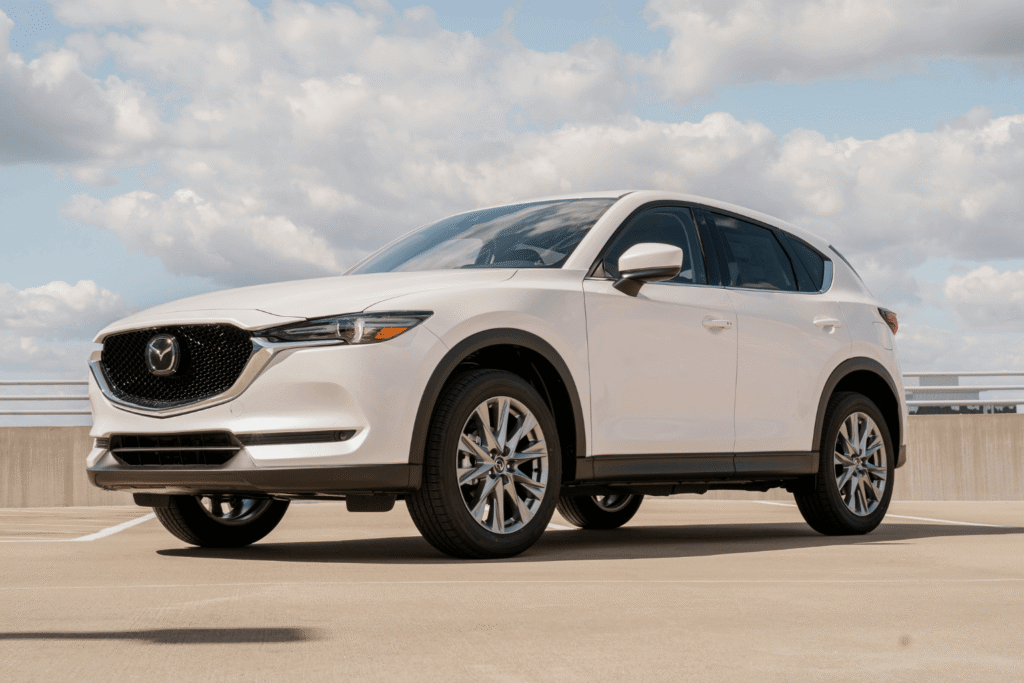
We verify the following i-ACTIVSENSE systems on every applicable repair:
- Smart Brake Support (SBS)
- Radar Cruise Control with Stop & Go
- Lane-Keep Assist System (LAS)
- Blind Spot Monitoring (BSM)
- Rear Cross Traffic Alert (RCTA)
- Driver Attention Alert (DAA)
- Traffic Sign Recognition (TSR)
Skipping this step isn’t just sloppy — it’s dangerous. Unfortunately, a 2025 survey by the Collision Industry Conference found that roughly 34% of collision-repaired ADAS-equipped vehicles in the U.S. left the shop with at least one uncalibrated sensor. We are not in that 34%.
Common Mazda Collision Repairs We See in Los Angeles Traffic
As a busy Mazda body shop serving all of Los Angeles, we see the same types of damage coming through our doors week after week. Los Angeles traffic is its own special kind of chaos. Here’s what rolls into our shop most often:
Rear-end impacts are the number one Mazda repair we see — and for good reason. Stop-and-go on the 10, the 405, and the 101 creates the perfect conditions for low-speed rear collisions. Even a 10 mph bump can activate the rear radar sensors (requiring calibration), crack the bumper fascia, and damage the rear parking camera.
Side mirror damage is shockingly common in LA’s tight street parking. Mazda’s power-folding mirrors look sleek but they’re expensive to replace — and if your model has BSM sensors integrated into the mirror housing (CX-50, CX-90, Mazda6), those need recalibration after any mirror replacement.
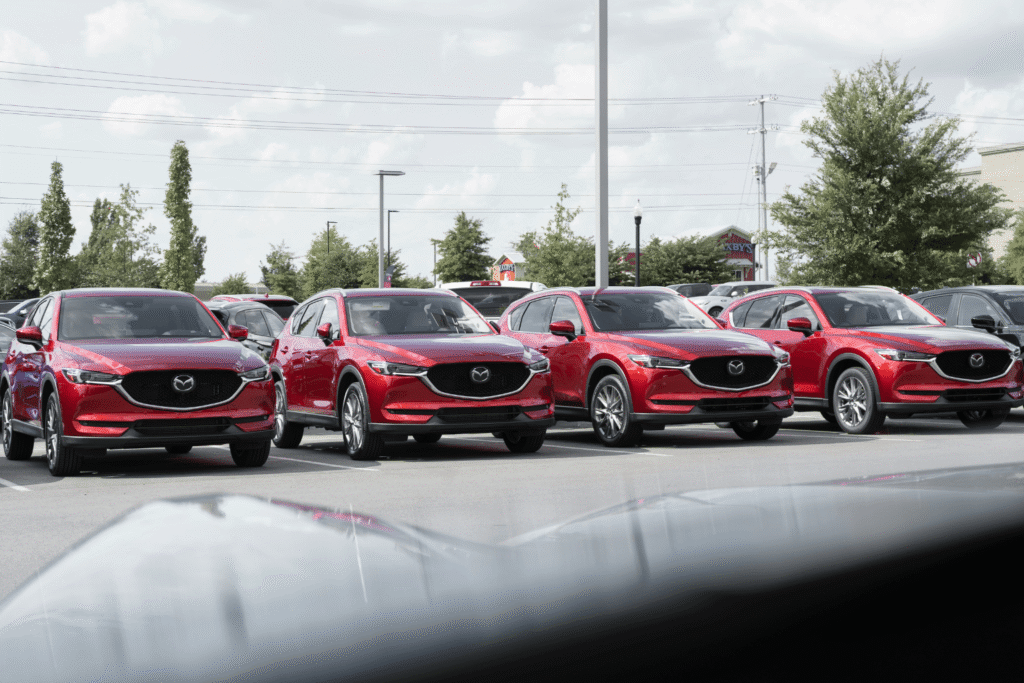
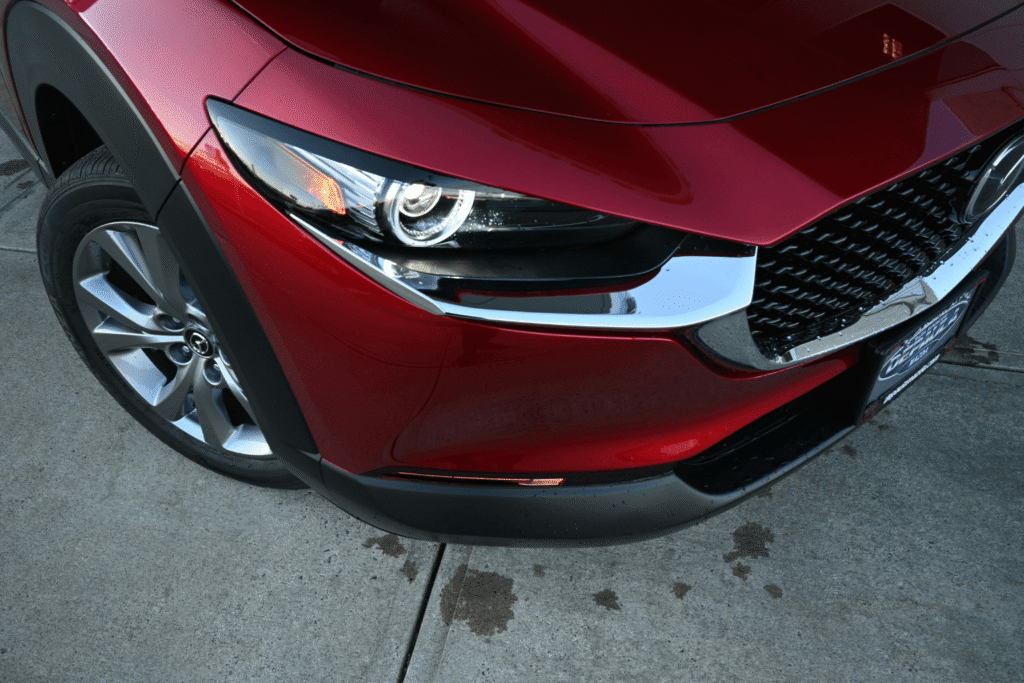
Front bumper and grille damage from parking lot incidents, debris on the freeway, and low-speed frontal impacts regularly brings in Soul Red Crystal and Machine Gray owners who are understandably anxious about paint matching and paint repair. This is where our spectrophotometer work really earns its reputation.
Door dings and panel damage — because this is Los Angeles, and people open car doors like they’re angry at everyone around them. Our paintless dent repair (PDR) techniques can resolve minor dings without any paint work on simpler colors, but complex Mazda premium paints often require full panel refinishing to achieve a seamless match.
Glass and Windshield replacement — especially on higher-trim Mazdas with a forward-facing camera embedded in the windshield mount. Replace the glass without recalibrating the camera, and your Lane Keep Assist is essentially guessing.
Mazda CX-30, CX-50, and CX-90 Repairs: What Makes Them Different
Not all Mazdas are built the same — and their collision repair profiles reflect that.
Mazda CX-30 is compact, lightweight, and uses Mazda’s GVC Plus (G-Vectoring Control) system, which integrates with the braking and engine management in ways that can be affected by frame misalignment. It’s also popular in Soul Red Crystal, making paint matching a frequent conversation.
Mazda CX-50 is built on a new, larger SKYACTIV platform with a significantly more complex front-end structure. The radar unit is mounted deeper in the grille area, and the front bumper substructure involves multiple aluminum and UHTS steel components. Front-end repairs on the CX-50 require more disassembly than owners typically expect — which is normal, and why we always provide a detailed written estimate upfront.

Mazda CX-90 is Mazda’s flagship, and it shows in repair complexity. As a three-row luxury SUV, it carries the most advanced i-ACTIVSENSE suite Mazda offers, including a 360-degree monitoring system. Any repair affecting any of the four corners of the vehicle — or the roof-mounted antenna — requires a comprehensive ADAS diagnostic. It also comes in Rhodium White Premium and Artisan Red Premium, both of which involve multi-stage pearl finishes that require the same spectrophotometer-guided approach as Soul Red Crystal.
Mazda3 — Mazda’s most popular sedan/hatchback — has a deceptively complex front structure for its size, with radar components integrated tightly into the front fascia. Its lower ride height also means it takes more damage from road debris and curb strikes than taller vehicles.
How AI-Assisted Collision Repair Is Changing Mazda Repairs in 2026
Alright, here’s something genuinely cool: the collision repair industry is going through a serious tech upgrade right now, and Mazda owners are benefiting directly.
In 2026, AI-assisted repair planning tools are becoming standard at specialist shops like ours. Here’s what that actually means in practice:
AI damage assessment
We use machine-learning imaging systems that scan collision damage and cross-reference it against a database of thousands of prior Mazda repairs to flag hidden structural damage that a visual inspection might miss. Think of it as a very experienced second opinion that works in seconds.
Predictive parts ordering
AI-assisted estimating tools now predict which secondary parts are statistically likely to be damaged based on the impact angle and visible damage. This reduces the "supplement cycle" — the frustrating back-and-forth where hidden damage is discovered mid-repair and causes delays — by flagging likely additional damage before teardown is even complete.
Paint formula AI refinement
Our color-matching software now uses AI to factor in the age of your vehicle's existing paint, the UV exposure typical of Southern California sunlight (which is intense — shocking, we know), and even the specific batch variation of Mazda's factory paint runs to give a more precise match formula than static spectrophotometer data alone.
Calibration verification AI
Post-calibration, our ADAS verification software uses AI-driven sensor pattern analysis to confirm calibration results are within Mazda's tolerances, rather than simply confirming the calibration process was completed.
A 2026 industry report from the Automotive Body Parts Association notes that shops using AI-assisted diagnostics see a 28% reduction in post-repair callbacks — which translates directly to faster repairs and fewer headaches for you.
What to Do After a Mazda Accident in Los Angeles (Step-by-Step Guide)
Accidents are stressful and nobody thinks clearly afterward. Here’s exactly what to do:
Step 1: Safety first
If the car is driveable and not blocking traffic, move it. Turn on hazards. Check for injuries.
Step 2: Document everything
Photos of all four corners of your car, the other vehicle, the scene, road conditions, and any visible damage. Do this before anything is moved if possible.
Step 3: File a police report
In California, you're required to report any accident involving injury or over $1,000 in property damage. Even if you think it's minor, get the report — Mazda bodywork is expensive and "minor" damage often exceeds $1,000.
Step 4: Notify your insurance
Call to open a claim, but be cautious about giving a recorded statement about fault before consulting with anyone. Stick to facts about what happened.
Step 5: Choose your body shop — you have the right
In California, your insurance company cannot legally force you to use their "preferred" shop. You have the right to choose any licensed body shop. Exercise that right and choose one that actually knows your vehicle.
Step 6: Call Metro Collision Center (323) 931-1369
We'll handle the insurance communication from here. We deal with every major carrier operating in California and we know how to get OEM parts and proper repair procedures approved without a two-week argument.
Step 7: Get a pre-repair diagnostic scan
Before any physical repair work begins, we scan your Mazda's entire computer network for fault codes. This is critical documentation for your insurance claim and for understanding the full scope of damage.
Step 8: Approve the estimate and relax
Once the estimate is finalized and insurance has been coordinated, we handle the rest. You'll get regular updates and we'll call you the moment your car is ready.
How Long Mazda Collision Repairs Typically Take in Los Angeles
This is the question everyone asks, and the honest answer is: it depends on the damage. But here are realistic benchmarks based on what we see in our shop:
Repair Type | Typical Timeframe |
Minor bumper repair (no sensor damage) | 2–3 business days |
Bumper replacement with ADAS calibration | 3–5 business days |
Single panel repaint (Soul Red/Machine Gray) | 3–4 business days |
Moderate front-end collision (structural + ADAS) | 7–12 business days |
Major collision with frame repair | 14–21+ business days |
Full rear-end replacement with sensors | 5–8 business days |
Two things in Los Angeles specifically add time that people don’t always factor in: parts availability and insurance supplementing. Genuine Mazda Parts for newer models like the CX-90 can sometimes have 3–5 business day shipping lead times from Mazda’s regional distribution center. And if additional damage is discovered during teardown, insurance approval for supplemental repairs adds 1–3 days.
We’re upfront about all of this at the beginning — no nasty surprises.

Insurance Claims for Mazda Repairs in California: What Drivers Should Know
When you bring your car to a reputable Mazda body shop in Los Angeles, part of the job is navigating California’s insurance landscape — which, thankfully, has some of the strongest consumer protections in the country. Here’s what actually matters for Mazda owners:
You can choose your body shop
California Insurance Code Section 758.5 prohibits insurers from requiring you to use a specific repair facility. If your adjuster implies otherwise, they're steering you — which is illegal.
You can request OEM parts
Under California Bureau of Automotive Repair regulations, you have the right to request Genuine Mazda Parts. Your insurer may ask you to pay the cost difference between OEM and aftermarket parts, depending on your policy. We document the safety case for OEM parts on every Mazda we repair — particularly for structural components and ADAS-integrated parts — to strengthen your claim.
ADAS calibration is a covered repair
This is still a point of contention with some adjusters who aren't up to date on modern vehicle technology. We handle this argument for you. Calibration is a mandatory safety procedure following sensor-adjacent repairs, not an optional add-on, and we provide documentation from Mazda's OEM repair procedures to support the claim.
Diminished value claims are available in California if your Mazda was not at fault. A properly repaired vehicle still loses market value after a collision — you may be entitled to compensation for that loss from the at-fault driver’s insurance.
We work with all major carriers: State Farm, GEICO, Allstate, Farmers, AAA, USAA, and more – read: all insurances. We know how each one operates, what they typically approve quickly, and where they tend to push back. That experience saves our customers significant time and frustration.
Ready To Get Your Mazda Back To Perfect?
Look, we know dealing with collision repairs is nobody’s idea of a good time. But here’s the thing — once you hand us your keys, the stressful part is genuinely over. We handle the insurance calls, the parts ordering, the sensor calibrations, the paint mixing, and all the behind-the-scenes chaos so you don’t have to think about any of it.
And you’re not just trusting any random shop off Yelp. Metro Collision Center is officially accredited for Mazda repairs — meaning we’ve met Mazda’s own standards for equipment, training, and repair procedures. That’s not a certificate we printed ourselves. Mazda actually vetted us.
We work with all major carriers: State Farm, GEICO, Allstate, Farmers, AAA, USAA, and more – read: all insurances. We know how each one operates, what they typically approve quickly, and where they tend to push back. That experience saves our customers significant time and frustration.
Our technicians hold I-CAR Gold Class certification — the highest professional recognition in the collision repair industry. I-CAR Gold Class means our team completes ongoing, role-specific training every single year to stay current with the latest repair technologies, materials, and procedures. For a Mazda owner in 2026, that matters more than ever. These cars are genuinely complex, and you want certified hands working on yours.
Here’s what our process looks like from your side:
- 📞 Call or submit a free estimate online — we respond fast, usually same day
- 🔍 Drop it off — we scan, assess, and handle all insurance communication
- 🔧 We repair it right — OEM parts, proper SKYACTIV procedures, full ADAS calibration
- 🎨 We paint it perfectly — spectrophotometer-matched Soul Red, Machine Gray, you name it
- 🚗 You pick it up — looking exactly like the accident never happened
Quick. Painless. Done right the first time.
Your Soul Red Crystal deserves a shop that actually understands what it’s made of. So does your Machine Gray. So does your peace of mind.
👉 Request your free estimate at metrocollisionla.com or give us a call. We’ll take it from here.
Metro Collision Center | Los Angeles, CA | Specializing in Mazda Body Shop Repair, OEM Structural Repair & i-ACTIVSENSE Calibration
Frequently Asked Questions
Can a body shop perfectly match Mazda Soul Red Crystal Metallic paint?
Yes, but it requires a specialized process that most standard shops simply aren’t equipped for. Soul Red Crystal Metallic is a quad-coat system involving a deep black base coat, a red metallic mid-coat, and a tinted clear coat — all in addition to the standard primer layer. The tinted clear coat is the critical differentiator: it’s a semi-transparent red-tinted topcoat that creates the paint’s signature depth and light-shifting quality. Without matching and applying this layer correctly, the repaired panel will appear visually flatter than the surrounding original paint, especially in direct sunlight. At Metro Collision Center, we use a Datacolor Spectrophotometer to analyze the existing paint formula, custom-mix all four layers to match your vehicle’s specific fade and age profile, and apply them in a climate-controlled spray environment. A correct Soul Red Crystal repair is indistinguishable from the original factory finish.
Do I need sensor calibration after a minor bumper repair on my Mazda?
Yes. Any removal or adjustment of the front or rear bumper cover on a modern Mazda equipped with i-ACTIVSENSE requires recalibration of the affected sensors. This includes the forward-facing radar (used for Smart Brake Support and Radar Cruise Control), front and rear parking sensors, and any cameras mounted in the bumper assembly. Sensor calibration is not optional — it’s a safety-critical procedure. A sensor that is physically displaced by even a few millimeters during bumper removal may function normally during a self-test but provide inaccurate data during real-world operation. At highway speeds, that inaccuracy can prevent the safety system from responding correctly. California body shops are required to restore vehicles to pre-accident safe operating condition, which includes all ADAS systems.
Can my insurance company force me to use an aftermarket part for my Mazda?
No. In California, you have the legal right to request Genuine OEM Mazda Parts for your repair. Under California regulations, your insurer cannot mandate the use of aftermarket or salvage parts without your consent. However, depending on your specific policy, the insurer may only cover the cost of the aftermarket equivalent and ask you to pay the price difference for OEM parts. There are important exceptions: for structural components, ADAS-integrated parts (like radar housings or camera brackets), and any part where the insurer cannot demonstrate that the aftermarket version meets OEM safety standards, we advocate strongly — and successfully — for full OEM coverage. California law and Mazda’s OEM repair procedures both support this position.
How long does a typical collision repair take at a Mazda body shop in Los Angeles?
Repair duration depends on damage severity, parts availability, and insurance processing speed. At Metro Collision Center, typical timelines are as follows: minor bumper repairs without sensor damage take 2–3 business days; bumper replacements with full ADAS calibration take 3–5 business days; single panel repaints in complex colors like Soul Red Crystal take 3–4 business days; moderate front-end collisions involving structural components and sensor systems take 7–12 business days; and major collisions requiring frame repair take 14–21 or more business days. Parts lead times for Genuine Mazda Parts — particularly for newer models like the CX-50 and CX-90 — can add 3–5 business days. We provide a detailed timeline estimate before any repair begins and communicate proactively if anything changes.
What is SKYACTIV-Body and why does it matter for collision repair?
SKYACTIV-Body is Mazda’s proprietary vehicle structure platform, introduced in 2012 and continuously refined through current models. It uses ultra-high-tensile steel (UHTS) with tensile strengths up to 1,500 MPa in strategically reinforced locations — roughly five to six times stronger than conventional mild steel — combined with softer crumple zones engineered to absorb and redirect crash energy along specific pathways. This controlled deformation is what keeps occupants safe in a collision. The critical repair implication is that UHTS cannot always be straightened like conventional steel — deformation can alter its metallurgical properties — and OEM repair procedures specify precisely where cuts and welds are permitted. A shop that doesn’t follow these procedures may restore the car’s appearance while compromising its crash performance. All Metro Collision Center structural repairs follow Mazda’s I-CAR-certified OEM procedures, with post-repair dimensional verification to confirm factory geometry tolerances.